A Very Cold Tuesday
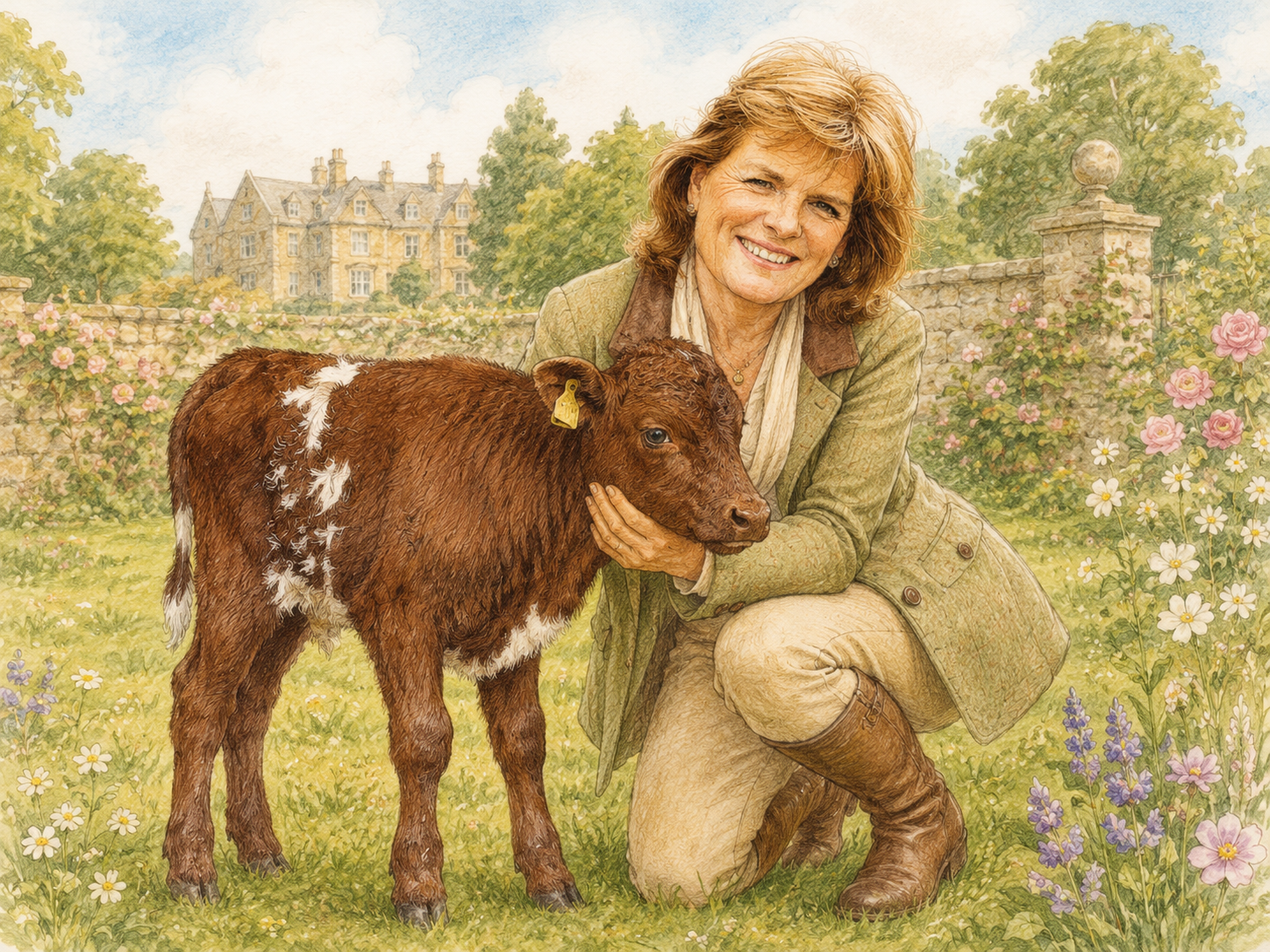
Stuart arrived on a Tuesday morning in March, which was, I can tell you, an absolutely miserable morning to arrive on. It was the sort of cold that gets into your bones before you've even opened the back door properly, and I hadn't had my coffee yet, and Nick, the Belvoir Castle shepherd, was standing in the yard in his coat looking rather serious, which is never a good sign at seven in the morning.
"The new calf came overnight," he said. "But the mother isn't taking to him."
Now, when a mother cow rejects her calf, it's not always dramatic. She doesn't chase him off or make a fuss. She just walks away. She moves to the other side of the field and grazes, and the little thing stands there looking confused, calling for her, and she doesn't come back. It's one of the saddest things you'll see on a working farm. It happens, and you learn to deal with it, but it is always sad.
I went out in my boots and my coat over my pyjamas — which is not how the Duchess of Rutland is supposed to look, I'm aware — and found this tiny calf sitting in the corner of the pen, shivering slightly, legs folded under him like a dropped parcel. He was a Herefordshire bull — a breed I had brought over with me from Wales — mostly brown, with a splash of white across his nose, and two ears that seemed a size too large for his head. He looked up at me with enormous eyes and made a sound that was somewhere between a moo and a question.
He looked up at me with enormous eyes and made a sound that was somewhere between a moo and a question.
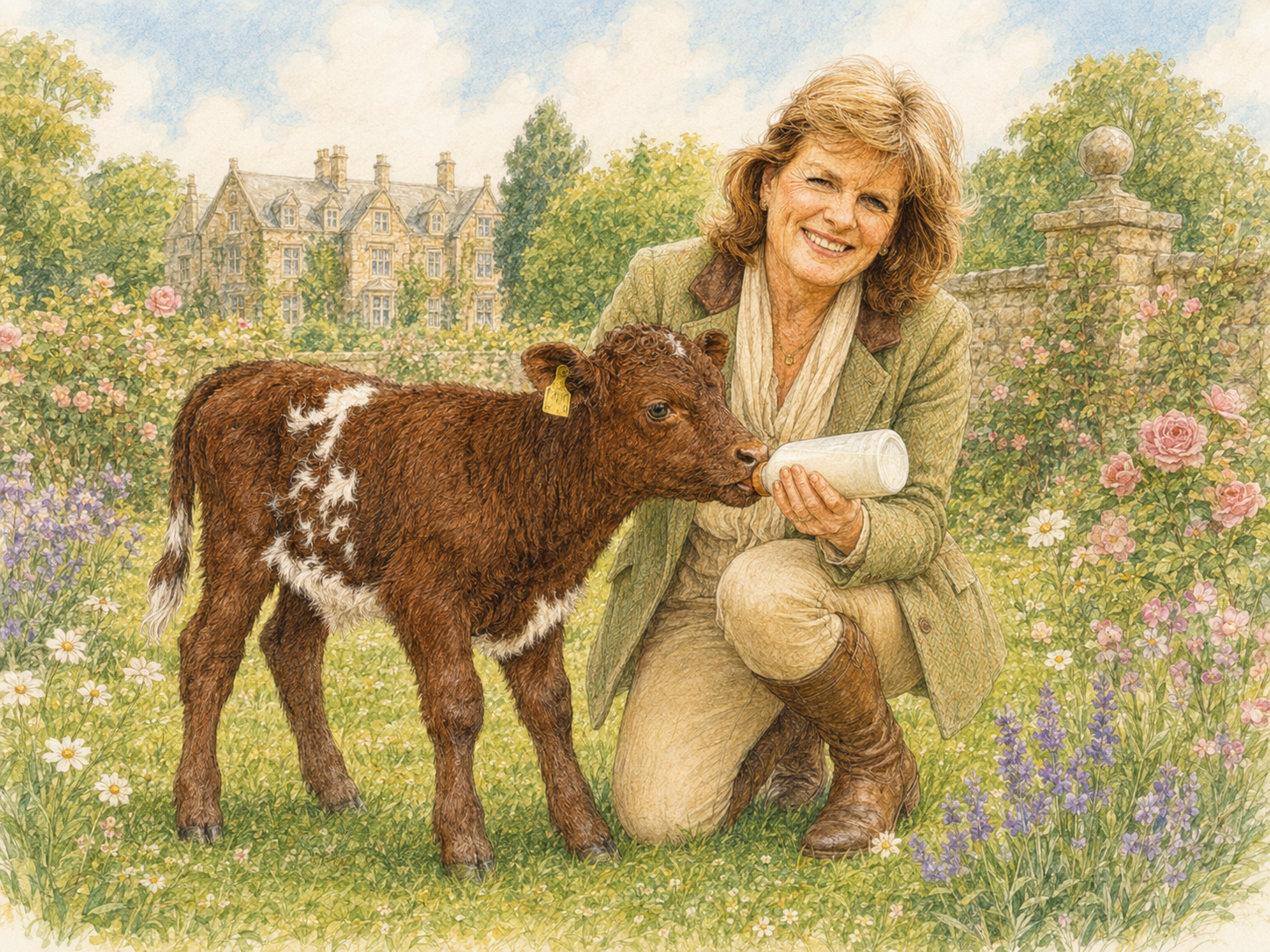
Nick handed me a bottle. "He'll need feeding every few hours," he said. "You did ask to be more involved this spring."
I had indeed said that. I rather regretted it at that moment, standing in a cold pen at seven in the morning in my pyjamas, but there we are.
Learning to Trust
Calves who are bottle-fed by people do something that the farming books warn you about, but that nobody really prepares you for emotionally. They decide that you are their mother. Not symbolically. Literally. He would hear my voice from the other side of the yard and start calling. He would follow me along the fence line. When I crouched down, he would press his nose into my hand and breathe warm, grassy breath on my fingers, and look at me in a way that I found quite difficult to be sensible about.
I named him Stuart — after no particular Stuart, it simply seemed to suit him. Nick put it on the feed chart before I'd finished my coffee, which is how things work around here. And once a calf has a name on this estate, that's rather that. He was Stuart.
The farming books call this imprinting. I call it, simply, the reason I am always slightly late to leave in the mornings.
What struck me about Stuart, from the very beginning, was how unhurried he was. Most young animals are restless — they fidget, they bounce, they want to know what everything is. Stuart would stand very still and watch you. He would take his time deciding whether a thing was worth his attention. He has this particular way of tilting his head — slightly to the left — when he's thinking something through. Nick says he does it before every feed, as if he's checking his sums. I think he does it because he's working out whether you're the sort of person he wants to bother with.
- He is a Herefordshire bull — a breed the Duchess brought over from Wales — and is partial to the sound of wellington boots on gravel. It means someone is coming, and someone coming usually means food.
- He has a complicated relationship with Gary the Goat, who lives nearby and who Stuart regards with deep suspicion. Gary finds this very funny.
- He will let children stroke his nose, but only if they stand still first and let him come to them. He will not be rushed.
- He is, as of this summer, considerably larger than he looks in photographs. Please do not be alarmed. He is extremely gentle.
Gary, and the Question of Cheese
I should say something about Gary the Goat, because you cannot really talk about Stuart without mentioning Gary. Gary arrived on the estate about six months before Stuart, and had already made himself thoroughly at home. He had learned, within his first week, that if he pressed his head against the lower latch of the feed store gate with enough persistence, it would sometimes open. He had also learned that this information was not worth sharing.
Goats and cattle don't always get along. There's a certain territorial pride involved. But what happened with Gary and Stuart was stranger than that — they ignored each other with such deliberate intensity that it became impossible not to notice. Gary would stand on his favourite post and look at the horizon. Stuart would stand in the field and look at the same horizon. Neither would acknowledge the other. It was, Nick said, like watching two people pretend they haven't seen each other at a party.
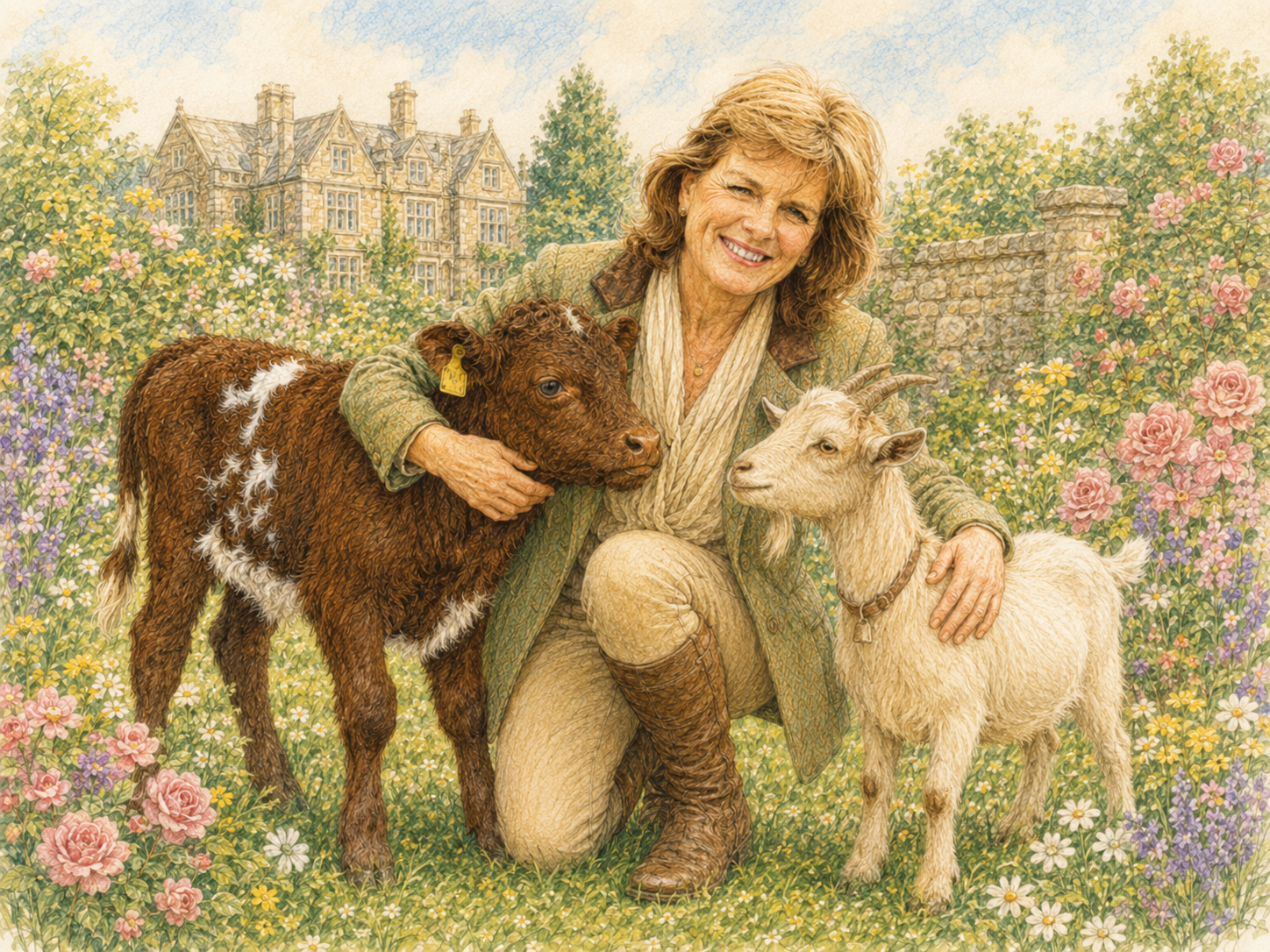
And then one afternoon I came out to find them standing shoulder to shoulder in the corner of the yard — Gary with his head resting on the fence rail, Stuart with his pressed alongside — both looking out at nothing in particular. When I came closer, they separated immediately and went back to ignoring each other.
They have never repeated it in front of anyone. But I know what I saw.
They have never repeated it in front of anyone. But I know what I saw.
What Stuart Taught Me
I have been asked, over the years, what it is about Belvoir that I most want children to feel when they visit. People expect me to say something about the history — the five hundred years of it, the rooms, the portraits, the sheer scale of the place. And of course that matters. But it isn't actually the first thing I think of.
What I want is for children to come around a corner and find an animal looking back at them. Not a picture of an animal. Not a model. A real one, with warm breath and muddy hooves and its own entirely particular way of regarding the world. I want them to have the experience of being assessed by something that isn't performing for them, that isn't trying to entertain them, that simply decides — in its own time, on its own terms — whether to come and say hello.
Stuart does this better than almost any animal I've known. He will make you wait. He will tilt his head and consider you. And then, if he decides you're worth it, he will walk over and press his nose into your hand, and breathe on your fingers, and that will be the best thing that has happened to you all day.
He has done this to a cabinet minister, two journalists, and my own mother, all of whom looked, for a moment, like entirely different people afterwards. Softer. More themselves.
The estate is many things. It is history and gardens and a castle that has stood here since the eleventh century. But it is also Gary the Goat pressing his head against a gate latch and pretending he doesn't know Stuart is watching. It is a cold Tuesday morning and a tiny calf with ears too large for his head. It is the way a farm wakes up before anyone else is ready for it.
Come and find Stuart when you visit. Stand still and let him come to you. He'll take his time — he always does. But I promise you, it will be worth waiting for.
Thank you for reading Stuart's story. He lives in the Animal Park, along with Gary, and Dave, and all the others who make Belvoir what it is — not just a castle, but a place that is actually, properly alive.
If you follow the trail this summer and collect all your stamps, you'll meet them at the end. Stuart will almost certainly be the one who tilts his head at you.
Don't be offended. He does it to everyone he likes.
Emma, Duchess of Rutland